
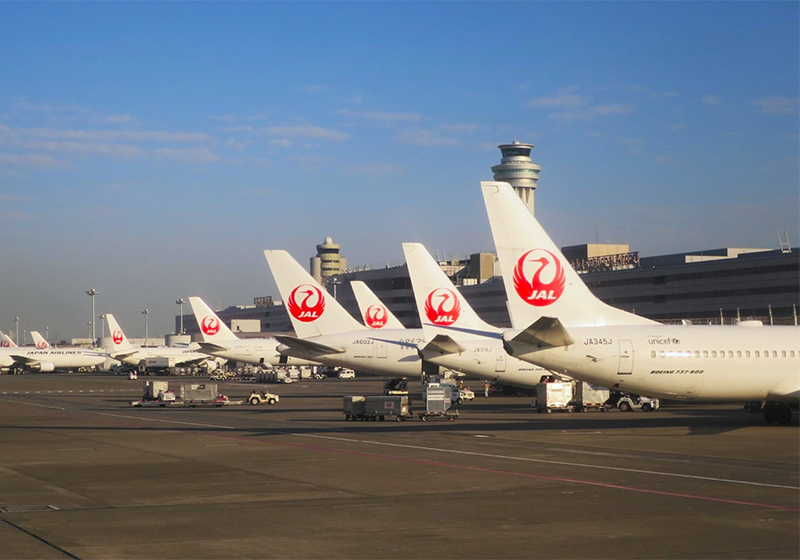
HAECO has announced the extension of its base maintenance agreement with Japan Airlines (JAL) through 2033. Delivered at HAECO’s state-of-the-art facility in Xiamen, the agreement covers JAL’s Boeing 737, 767, 777, 787 and Airbus A350 aircraft and is expected to support more than 180 aircraft inputs.
HAECO and JAL have enjoyed a successful partnership in Xiamen for more than 20 years, with over 430 aircraft inputs completed to date. In 2025, the partnership reached another milestone with the induction of the first JAL Airbus A350 for base maintenance. As HAECO prepares to relocate to the new Xiang’an International Airport in Xiamen at the end of this year, JAL will continue to leverage its capabilities to ensure the smooth operation of its fleet.
Gerald Steinhoff, Chief Commercial Officer of HAECO, said: “We are proud of the longstanding relationship we have built with JAL. For more than 20 years, our Xiamen facility has supported its fleet, earning the trust that has enabled our collaboration to grow beyond base maintenance to include line maintenance services in Hong Kong. The strength and depth of this partnership reflect our shared commitment to excellence, and we remain dedicated to supporting JAL’s continued success.”
Takashi Hamamoto, Executive Officer, Senior Vice President, Engineering & Maintenance Division of JAL, said: “HAECO has been a trusted and highly valued partner to JAL over many years, delivering tailored solutions that support both our widebody and narrowbody fleets through a comprehensive range of technical and operational services. Having achieved the milestone of more than 430 aircraft inputs together, we are delighted to continue our base maintenance partnership with HAECO as it transitions to its new facility in Xiamen. We look forward to further developing our partnership to shape the future of the sky together in the years ahead."
Scheduled to enter operation by the end of 2026, HAECO’s new maintenance base at Xiang’an International Airport in Xiamen has already been awarded LEED Platinum certification, becoming the first civil aviation hangar outside the U.S. to achieve this distinction. As the world’s largest single-span hangar, the facility is set to establish new benchmarks for sustainability, technological innovation and operational efficiency in aircraft maintenance.